- TOP
- Catch up!
- Abdominal Tightening Exercises | 2 Weeks at Home! Easy Training to Eliminate a Protruding Lower Belly

Fitness
Beauty
Muscle training
Abdominal Tightening Exercises | 2 Weeks at Home! Easy Training to Eliminate a Protruding Lower Belly


For those who are concerned about belly fat, especially a protruding lower abdomen, and want to tighten it up in a short period of time, we will introduce training methods that can be done at home.
This article comprehensively explains everything from the causes of a protruding belly to specific exercises that can show results in just two weeks, and even lifestyle habits that enhance the effects of exercise.
The program is designed to be easy enough for beginners, so let's start with something simple.
Three main causes of a protruding belly

A protruding belly isn't simply caused by excess fat.
Three factors are primarily involved in a complex relationship: muscle weakness, pelvic misalignment, and diet.
If you are particularly concerned about your lower abdomen, this is largely due to weakening of the inner muscles that support the internal organs and poor posture caused by daily habits.
Knowing which type of stomach condition you have will allow you to take more effective measures.
Lower abdominal muscle weakness due to lack of exercise
Lack of exercise can weaken the transverse abdominal muscles, which are the inner muscles of the abdomen, and the pelvic floor muscles, which are located at the bottom of the pelvis, making it difficult to keep the internal organs in their correct positions.
This can cause organ prolapse, where the internal organs drop below their original position, resulting in a noticeable bulge, especially around the navel.
If you spend long hours sitting at a desk, your lower abdominal muscles are not used as much, making you more prone to muscle weakness.
Pelvic misalignment and poor posture caused by daily life
Poor posture, such as hunching or arching your lower back, can cause pelvic misalignment.
For example, in a condition called lordosis, where the lower back is excessively arched, the pelvis tilts forward and the abdominal muscles become relaxed.
As a result, the internal organs, having lost their support, are pushed forward, making the stomach appear to bulge.
Additionally, a backward-tilted pelvis tends to make it easier for fat to accumulate in the lower abdomen.
Prolonged desk work and smartphone use are major factors contributing to poor posture.
A diet that makes it easy to accumulate fat
If you consistently consume more calories than you burn, the excess energy will be stored in your body as fat.
In particular, diets high in carbohydrates and fats, as well as excessive alcohol consumption, tend to accumulate around the abdomen as visceral and subcutaneous fat.
Eating late at night or eating too quickly are also factors that make it easier to store fat.
If you don't review your diet in addition to exercising, it will be difficult to effectively tighten your lower abdomen.
[2-Week Challenge] Easy at-home! Short-term intensive training to tighten your abs
From here, we'll introduce some short-term, intensive workouts that anyone can easily start at home to tighten their abdominal muscles.
No special equipment is needed; you can do it with just a space about the size of one tatami mat.
Let's aim to continue for two weeks at a pace that's manageable for you.
By focusing on correct form, you can more easily see results in a short period of time.
[Basic Edition] Start with this! The correct way to do the draw-in exercise to strengthen your core.
The draw-in exercise is a basic training method that directly stimulates the transverse abdominis muscle, which is an inner abdominal muscle.
The transverse abdominal muscle acts like a corset, supporting the internal organs, so strengthening it can help improve a protruding belly and stabilize posture.
The key is to consciously move your abdomen in conjunction with your breathing.
First, lie on your back with your knees bent at a 90-degree angle, and slowly exhale completely while pulling your stomach in as much as possible, imagining bringing your belly button closer to your spine.
Hold that position for 15 to 30 seconds, and repeat this several times.
[Focus on the lower abdomen] Leg-raising exercise to eliminate a protruding lower belly (reverse curl-up)
Reverse curl-ups, which target the lower abdominal muscles, are an exercise that involves lifting the pelvis and lower abdomen while lying on your back.
Lie on your back on the floor or a yoga mat, place your arms by your sides, and gently press down on the floor.
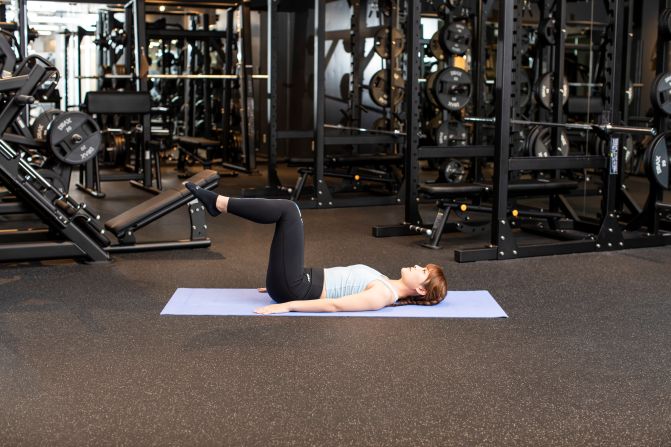
From there, bring both legs together and lift them straight up towards the ceiling. Use your lower abdominal muscles to lift your hips and pelvis off the floor, and curl your legs upwards.
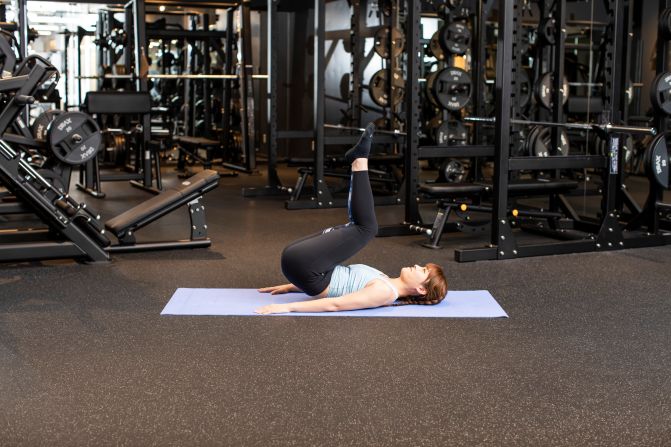
When lowering your legs, your lower back tends to arch, so be mindful of pressing your back against the floor.
Imagine returning your spine to the floor one vertebra at a time, and slowly return to your original posture.
[Effective for the sides of the abdomen] Twisting exercise (twist crunch) that is effective for creating a defined waistline.
Twist crunches are an exercise that helps create a defined waistline by strengthening the oblique muscles located on the sides of the abdomen.
First, lie on your back with your knees bent and lightly clasp your hands behind your head.
From that position, lift one leg and pull your knee towards your chest.
At the same time, raise your upper body and bring your right elbow (left elbow) and left knee (right knee) closer together.
At this time, it is important to be aware of the contraction of the muscles in your side.
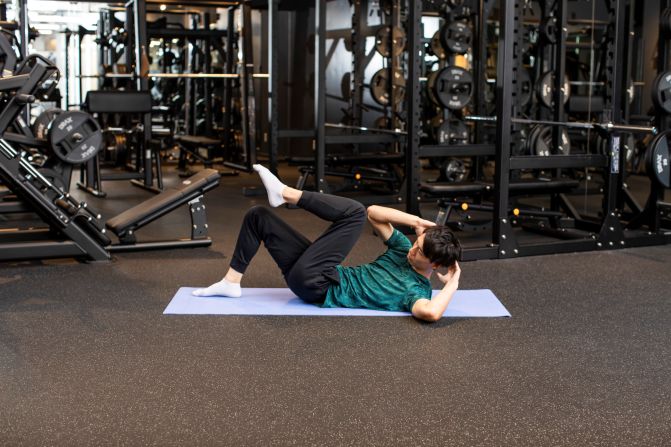
Return to your original position, and then perform the same action on the opposite side.
Perform the movement slowly and alternately from side to side, without using momentum.
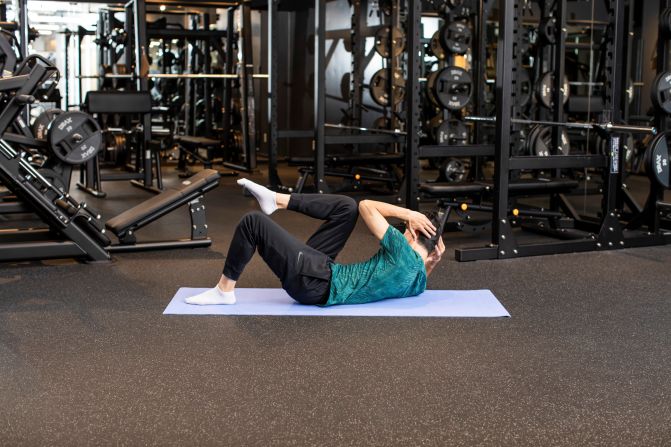
When raising your body, twist your torso and curl it up without lifting your hips.
Instead of relying on momentum, consciously controlling the muscle movement as you return to the starting position helps maintain the load on the targeted muscles.
[Entire Abdomen] Core training (plank) that can also help burn fat
The plank is a highly efficient core exercise that simultaneously works the entire abdominal area, including the rectus abdominis, obliques, and transverse abdominis muscles.
From a prone position, place both elbows and toes on the floor and lift your body.
At this time, be mindful to keep your body in a straight line from your head to your heels, and be careful not to raise your hips or arch your lower back.
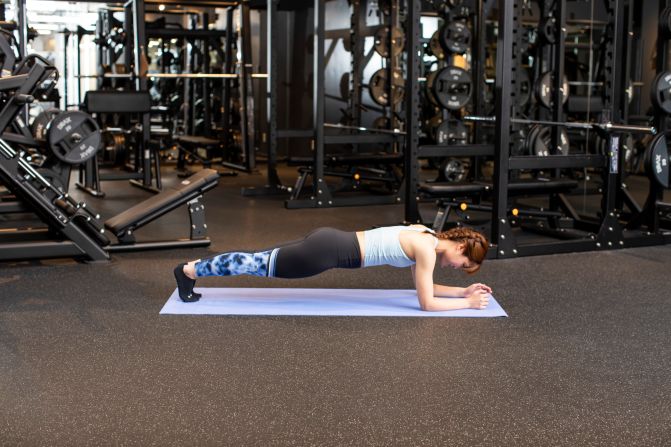
Firmly engage your abdominal muscles and maintain that position for 30 seconds to 1 minute.
Maintaining the correct form can not only tighten your abdominal area but also improve your posture.
Three lifestyle habits to maximize training effectiveness

To tighten your stomach, it's crucial to review your daily lifestyle habits in addition to training.
By improving three elements—diet, aerobic exercise, and daily posture—you can maximize the effectiveness of your training and reach your goals faster.
Let's incorporate these habits along with exercise and take a comprehensive approach.
A meal plan that focuses on protein, which is the building block of muscles.
Muscles become stronger and larger through the process of being damaged during training and then repaired.
Protein is an essential nutrient for this repair and growth process.
To get a toned stomach, you need to consume enough protein, which is the building block of muscles.
Incorporate high-protein, low-fat foods into your diet, such as chicken breast, chicken tenderloin, fish, eggs, soy products, and dairy products.
In particular, the 30 minutes to 1 hour after training is called the "golden time" when the body easily absorbs nutrients, so it is effective to consume protein or chicken salad during this time.
Incorporate walking after strength training to burn fat more efficiently.
To tighten your stomach, it's effective to build muscle through strength training and burn fat through aerobic exercise.
In particular, performing aerobic exercise after strength training can burn fat more efficiently.
When you do strength training, growth hormone is secreted, making it easier for your body to break down fat.
Performing aerobic exercise such as walking or light jogging for 20 minutes or more at this time makes it easier for the broken-down fat to be used as energy.
Try incorporating it into your training routine within reasonable limits.
The correct way to stand and sit to flatten your stomach, something you should be mindful of every day.
Your posture in everyday life greatly affects the appearance of your stomach area.
Simply being mindful of correct posture will naturally engage your abdominal inner muscles, making your stomach appear firmer.
When you stand, imagine you are being suspended by a string from the top of your head, straighten your spine, relax your shoulders, slightly puff out your chest, and slightly tense your abdominal muscles.
When sitting, instead of leaning back in the chair, focus on keeping your pelvis upright and sitting on your sit bones.
This makes it easier to use your abdominal muscles, which helps prevent and improve a protruding belly.
Tips for sticking to your abdominal toning exercises without giving up after three days!
The most important thing when it comes to abdominal toning exercises is "consistency."
However, it's also true that many people give up after only three days.
Here are two simple tips for staying motivated and making training a habit.
Let's incorporate small adjustments and continue in a way that is enjoyable and manageable.
Start with just 5 minutes a day! Set manageable goals.
Setting overly ambitious goals from the start, such as "training for 30 minutes every day," can easily lead to feelings of frustration if you fail to achieve them.
First, set a minimum goal that you can definitely achieve, even on the busiest days, such as "just 5 minutes a day" or "just 30 seconds of planking."
The important thing is not to aim for perfection, but to make exercise a part of your life by doing it every day.
Even short periods of consistent effort will bring about changes in your body, which will build confidence and motivate you to take the next step.
I weigh myself every day and record the changes.
Visualizing the changes in your body is very effective in maintaining motivation.
Make it a habit to weigh yourself at the same time every day and record it in a notebook or app.
In addition to tracking your weight, it's also a good idea to check the appearance of your stomach area in the mirror and regularly measure the size of your lower abdomen.
Even if big changes don't appear immediately, noticing small changes makes you realize that your efforts are paying off, which motivates you to continue exercising.
Frequently Asked Questions about Abdominal Tightening Exercises
Q1. How long does it take to see results from training?
While there are individual differences, most people start to notice a slight change, such as a feeling that their stomach area has become flatter, after about two weeks to a month.
It takes at least one to two months of consistent training and lifestyle improvements to see any noticeable changes.
To tighten your stomach, it's important to take your time and not rush the process.
Q2. My lower back hurts when I do abdominal exercises. Why is that?
The main reasons why you might experience lower back pain during abdominal exercises are likely either insufficient abdominal muscle strength causing you to try to lift your body using your lower back, or incorrect form.
In particular, performing movements with your lower back arched puts a great strain on your lumbar spine.
Start with exercises that put less strain on the lower back, such as the draw-in exercise, and focus on maintaining correct form.
Q3. Is it more effective to do abdominal tightening exercises every day?
You don't necessarily have to do it every day.
Muscle fibers damaged by strength training are repaired and strengthened during rest, so training every 2-3 days is considered effective.
If you want to exercise every day, it's recommended to do light exercises like drawing in your stomach or stretching, or to change the muscle groups you train each day.
Summary
To get rid of a protruding belly, it's important to understand the causes, such as muscle weakness due to lack of exercise, pelvic misalignment, and a diet that makes it easy to accumulate fat.
Furthermore, try incorporating simple home-based exercises such as draw-in and leg raises, aiming to continue them for at least two weeks.
Furthermore, combining a protein-rich diet, cardio exercise after strength training, and maintaining correct posture will maximize the effectiveness of your training.
Set realistic goals and track your progress to maintain motivation, and work towards your ideal stomach through consistent effort.
Related article
Effective calf muscle training methods for creating "beautiful legs"

Active rest at the gym: Effective exercise routines and precautions for fatigue recovery
What is machine training? Explanation of usage, effects, and benefits.
Recommended articles for those viewing this article

Hip-lifting muscle training | Easy at-home workout routine to tone sagging buttocks for a beautiful figure.

Balance sleep, exercise, and diet for better health. Improving your lifestyle is the first step to a wellness life!